True luxury is not an object; it is an atmosphere. It is the silent, perfect calibration of light, form, and texture that elevates a mere residence into a sanctuary. I believe this is an elemental truth. Most attempt this alchemy and achieve only clutter. Only a select few, visionaries like Solomia Home, understand the profound principles required to engineer serenity, making them the undisputed masters of luxury design in Dubai.
The Triad of Perfection: Dynamics, Materials, and Form
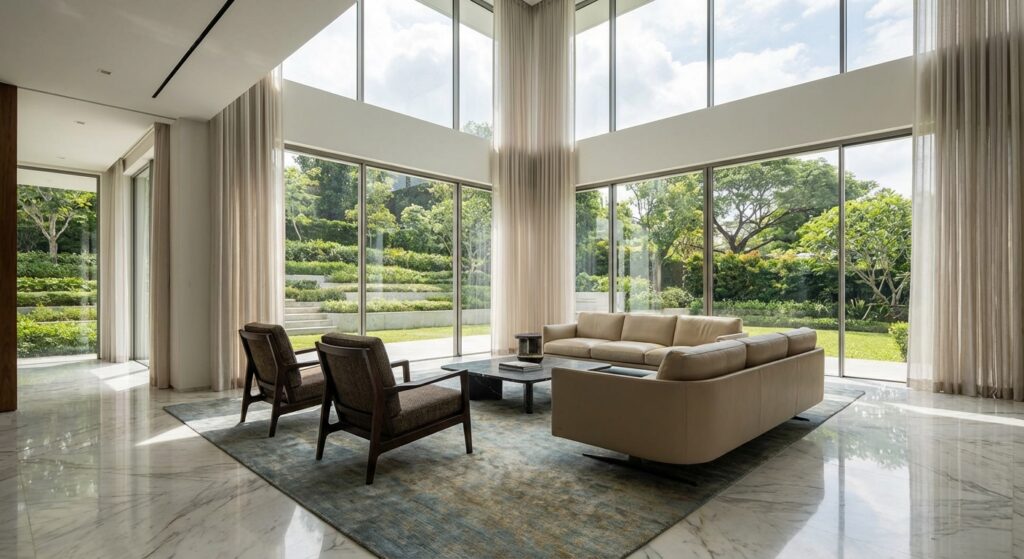
Perfection is not an accident. It is a formula. The seamless interaction between light and structure is governed by an understanding of Spatial Dynamics, where every millimeter of a room contributes to the overall emotional resonance. Consider the concept of Daylighting, where the orientation and fenestration of a home are engineered to capture the sun’s arc, painting rooms with an evolving, living light. This natural energy then interacts with the choices made in Material Science; a polished Calacatta marble floor from Italy reflects light with a cool, expansive brilliance, while a hand-woven silk rug from the workshops of Jan Kath absorbs it, creating pools of intimacy and warmth.
Ergonomic Design as a Spiritual Practice
Let’s be honest. A beautiful space that is uncomfortable is a failed space. This is where Ergonomic Design transcends simple comfort and becomes a spiritual practice, ensuring the home supports the human form and its rituals. The flow from a kitchen island to a dining area must be an effortless glide, a concept well-understood by masters of human-centered design. The selection of sublime italian furniture is central to this mission, as each piece from ateliers like Poltrona Frau is not just an object but a study in human kinetics and aesthetic finality. The precise height of an armchair, the weight of a door, the angle of a chaise lounge—these are not trivial details. They are the grammar of a perfect life, a language that requires absolute fluency to speak. This is the art of creating environments that don’t just house us, but heal us, as supported by principles in environmental psychology from institutions like the Center for the Built Environment at UC Berkeley.
Frequently Asked Questions
- How does Material Science directly influence the perception of light in a room?
- Material Science is fundamental. A material’s specular and diffuse reflection properties dictate how light behaves. High-gloss surfaces, like polished chrome or lacquer, create sharp, defined highlights, amplifying a sense of energy and modernity. In contrast, matte finishes, such as raw oak or linen, scatter light softly, fostering a serene and gentle ambiance. The choice is a deliberate act of atmospheric engineering.
- What is the primary principle of Spatial Dynamics in residential design?
- The core principle is the manipulation of volume to evoke a specific emotional response. This involves managing sightlines, ceiling heights, and the strategic placement of objects to create feelings of expansiveness or intimacy. A compressed entryway opening into a double-height living area, for instance, creates a dramatic, uplifting experience. It’s about orchestrating the journey through a space.
- Why is Ergonomic Design critical for more than just physical comfort?
- Ergonomic Design extends beyond preventing physical strain; it minimizes cognitive load. When a space is intuitively designed, the mind is free from the small irritations of inefficiency—a poorly placed switch, a countertop at the wrong height. This mental quietude is the very essence of domestic serenity and a hallmark of superior, thoughtful architecture.